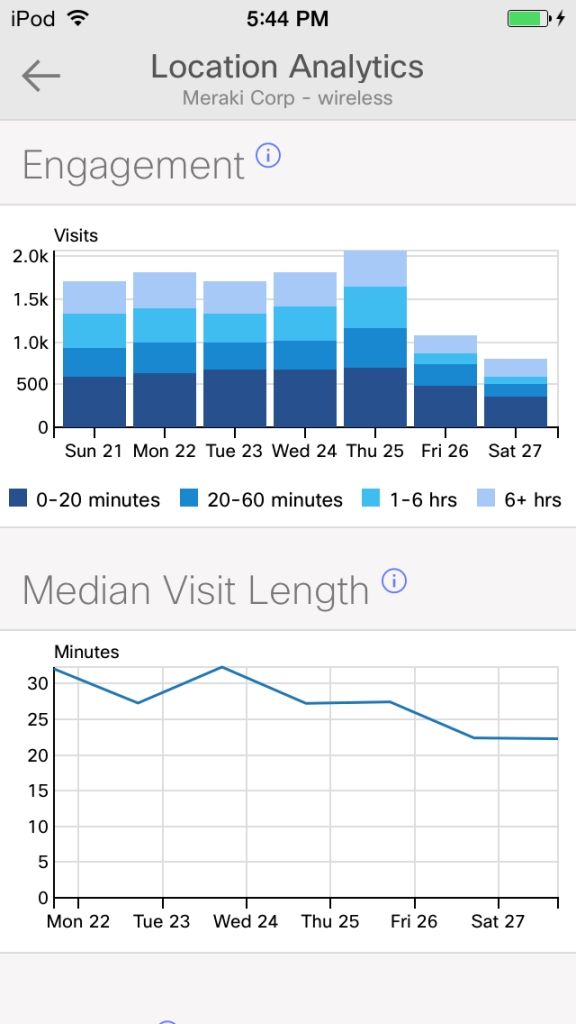

Meraki Dashboard Mobile App The Meraki dashboard provides a simple, integrated tool to help network...
Solving Wireless Network Range issues with New Cisco Meraki Access Point (Meraki AP)
Being able to provide a strong wireless network across broad areas generally runs into two roadblocks: interference and speed. As the number of wireless networks in today's world increases, they often compete for available frequencies, or overloading industry standard ranges, degrading performance. Additionally as one moves farther away from an access point, transmission errors are introduced, reducing the overall speed of the connection. Cisco Meraki has taken great strides to reduce the impact of these problems and solve range issues by designing their access points for today's heavily-networked environments.
The Cisco Meraki Antenas
Outside of the many advanced technologies which make up the brains of a wireless access point, the most important aspect of its design is the antenna. The antenna carries the signal from the access point's internals and broadcasts it out to the world as well as receiving client signals and relaying data back to the network, making it an essential and integral component of any access point. Every Cisco Meraki access point combines two or even three antennas to maximize the transmission and reception power of its units.
Most antennas are one of two types: omnidirectional, meaning they broadcast and receive in all directions, and sector antennas, which are focused in a specific direction. Omnidirectional antennas are most useful when the access point is centrally located, providing broad coverage over a circular area around the base station. Sector or directional antennas provide coverage over a much greater area, but only in one specific direction, and are useful if the access point is located in a far corner or in places where wireless clients will be concentrated in one specific area.
Meraki MR32 and MR72
In developing and releasing its new MR32 and MR72 access point models, Cisco Meraki had the opportunity to revisit antenna design and build on their years of experience and customer feedback with their other models already in wide usage. In addition to the built in wireless radios, they have included a third antenna, referred to as the Security Radio. By separating this antenna from the normal networking side of the equation, it is able to provide real-time scanning of possible sources of interference, clients exhibiting nefarious behavior, and displaying accurate information to the network administrator through the Cisco Meraki Cloud dashboard.
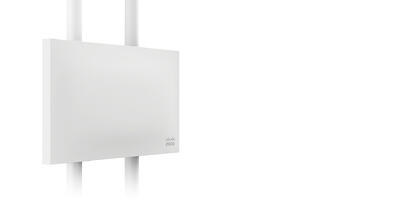
The MR72 is Cisco Meraki's first outdoor 802.11ac access point, and a great deal of care has gone into the design of the antennas that will service external locations. Unlike most internal situations the environment for an external access point is variable, with wildly fluctuating humidity, temperature, and even sun exposure. With specially-designed antennas the MR72 is able to maintain consistent operating performance from -40º to 158ºF, suitable from Fairbanks, Alaska to Death Valley, California.
While the security radio is contained within the access point body, all Cisco Meraki outdoor access points have industry-standard N-type connectors which allow customers to change the antenna to provide specific needs, such as directional coverage or site-to-site bridging. As an added bonus to its clients, the access point itself is always covered under its standard license, no matter what kind of antenna is attached.
With groundbreaking frequency scanning and interference detection, provided by the built-in security radio, Cisco Meraki is creating a new standard in wireless usability, even across long ranges and in heavily-saturated environments like many commercial office buildings.
Free Access Point for Qualified IT Professionals
IT professionals can receive a free Meraki Access Point after attending a free online Cisco Meraki webinar. Sign up for your free AP now.
* To be eligible for a free access point, participants must be an IT professional. Existing Meraki customers are not eligible. Limit of one free AP per company. For more details, click here.